Walking deserves credit. It is accessible, low-impact, good for the heart, good for mood, and one of the easiest ways to stay active as you get older. For many adults over 60, it is the foundation of a healthy routine.
But walking alone is not enough.
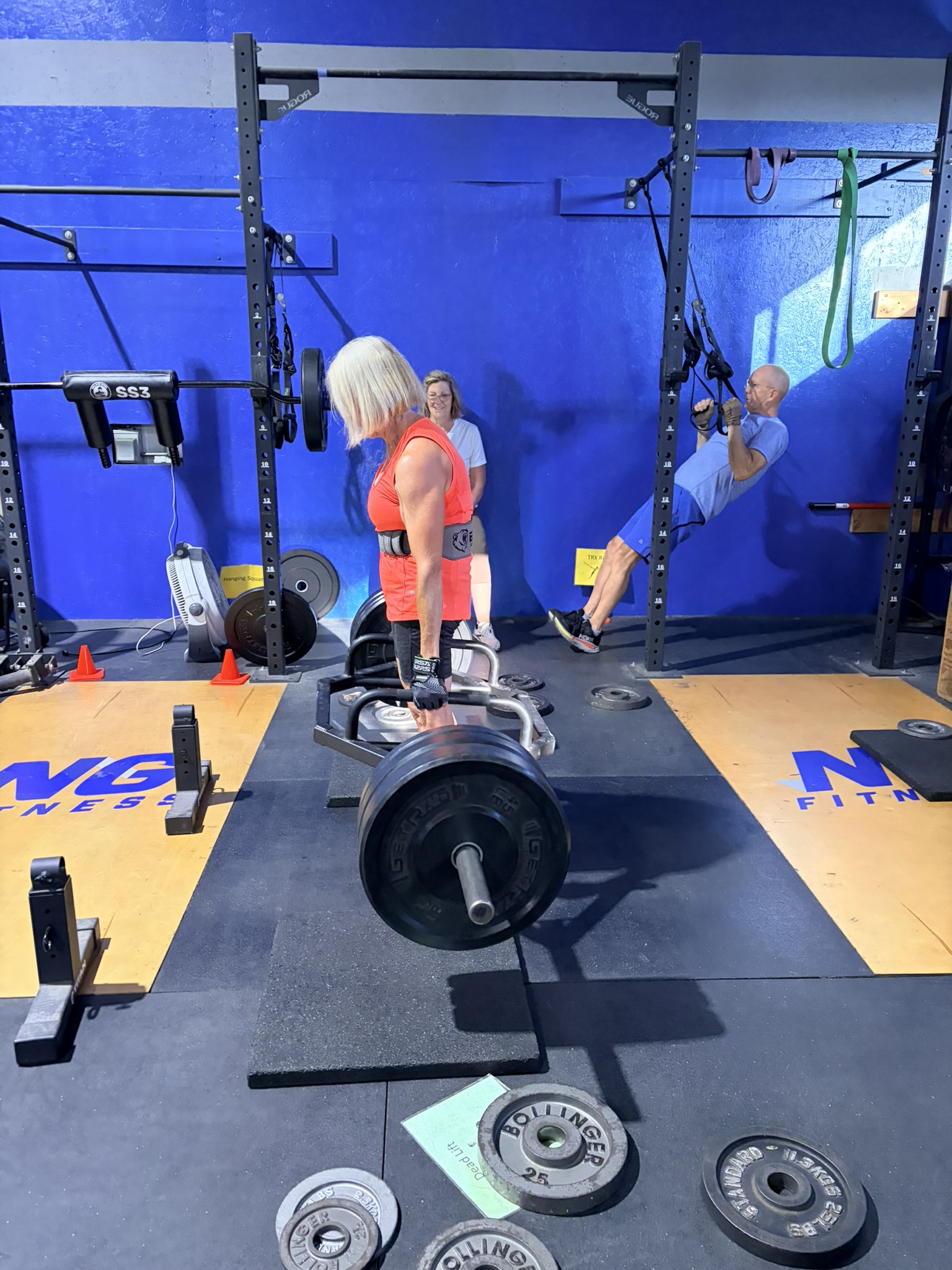
If your goal is to stay independent, protect your bones, reduce fall risk, and keep doing everyday tasks with confidence, you need more than steps. You need strength training.
Why walking helps – but has limits
Walking improves cardiovascular health, supports endurance, and can help with weight management. It also keeps you moving, which matters at every age.
The problem is that walking does not do enough to fully address the physical changes that come with aging. After 60, the body naturally loses muscle mass, strength, and bone density at a faster rate. That loss affects how easily you can climb stairs, stand up from a chair, carry groceries, catch yourself if you trip, or recover from a fall.
Walking keeps you active. Strength training helps keep you capable.
What changes after 60
Aging does not just mean getting a little slower. It changes the body in specific ways that exercise needs to address.
Muscle loss speeds up
Age-related muscle loss, called sarcopenia, can begin years before retirement, but it becomes more noticeable and more impactful later in life. This loss does not just affect appearance. It affects balance, mobility, reaction time, and the strength needed for daily living. Resistance training is the most effective form of exercise for slowing that decline and preserving function.
Bone density declines
As we age, bones become more fragile, especially for women after menopause and for older adults with low activity levels. Walking can help maintain general activity, but strength training places a more meaningful load on bones, which helps stimulate the body to maintain or improve bone strength.
Everyday movement gets harder
The challenge many older adults notice first is not in the gym. It is at home. Standing up, reaching overhead, lifting laundry, getting off the floor, walking uphill, and carrying bags all require strength. When strength fades, independence fades with it.
That is why strength training is not about bodybuilding. It is about staying able.
Why strength training matters more than most people realize
Strength training supports the parts of aging that walking cannot fully cover.
It improves balance and fall resistance
Falls are one of the biggest threats to long-term independence. Stronger legs, hips, and core muscles help you stay steady and react faster if you stumble. Resistance training improves the physical capacity behind balance, not just balance itself.
It makes daily life easier
Strength training improves practical function: walking speed, grip strength, knee extension, and the ability to rise from a chair or climb stairs. These are not minor fitness metrics. They are quality-of-life metrics.
It helps preserve independence
One of the clearest benefits of strength training after 60 is that it supports self-sufficiency. The stronger you are, the more likely you are to keep doing your own errands, household tasks, and favorite activities without needing help.
It complements walking instead of replacing it
This is not an argument against walking. It is an argument against walking only.
Walking is excellent for heart health, stamina, and general activity. Strength training fills in the missing pieces: muscle, bone, power, and functional capacity. Together, they create a much more complete plan for healthy aging.
What strength training actually looks like after 60
For many people, the phrase “strength training” still brings up images of heavy barbells and intense gym sessions. That is not the only version, and it is not where most people should start.
Strength training after 60 can include:
- Chair squats or sit-to-stands, which build leg strength for getting up and down safely.
- Wall push-ups, which strengthen the chest, shoulders, and arms without floor work.
- Resistance band rows, which improve posture and upper back strength.
- Heel raises, which support calves, ankles, and balance.
- Light dumbbell exercises, which can build strength safely with controlled movement.
Even simple resistance work done consistently can make a meaningful difference.
How often should you do it?
For older adults, muscle-strengthening activity at least two days per week is a widely recommended starting point, alongside aerobic exercise and balance work.
That does not mean two exhausting workouts. It can mean two short, manageable sessions focused on major muscle groups with good form and gradual progression.
Consistency matters more than intensity at the beginning.
A simple weekly approach
A balanced routine after 60 might look like this:
| Day | Focus |
|---|---|
| Monday | 30-minute walk + 20 minutes of strength training |
| Tuesday | Easy walk or mobility work |
| Wednesday | 30-minute walk + strength training |
| Thursday | Rest or light activity |
| Friday | Brisk walk + balance exercises |
| Saturday | Strength training or functional movement session |
| Sunday | Recovery walk |
This kind of plan supports heart health, mobility, and strength without overcomplicating exercise.
How to start safely
If you are new to strength training, the best approach is simple:
- Start light. Bodyweight, bands, or light dumbbells are enough in the beginning.
- Focus on form. Controlled movement matters more than how much weight you lift.
- Train the major muscle groups. Legs, hips, back, chest, shoulders, arms, and core all matter.
- Progress gradually. Add a few reps, a little resistance, or another set over time.
- Talk to your doctor first if you have a chronic condition, recent injury, osteoporosis, or long gap in activity. That is especially important when exercise advice becomes personal or medical.
The bigger message
The real issue is not whether walking is good. It is. The issue is whether walking alone is enough to protect your body from the biggest physical threats of aging.
For most adults over 60, it is not.
If you want to keep your strength, protect your bones, lower your fall risk, and stay independent longer, walking should stay in your routine – but strength training needs to join it.
Because after 60, the goal is not just to keep moving.
It is to keep moving well.
If you want this adapted into a more opinionated, magazine-style blog voice or a more clinical wellness-brand voice, that would be a natural next version.